Transition and Internal Ownership Over Time
Client: scaleLIT
Partnership Type: Ongoing program communications support
Context
As scaleLIT’s communications matured, long-term sustainability required more than consistent execution. It required internal confidence, shared understanding, and clear ownership.
From the outset, the goal of the partnership was not dependency. It was to support scaleLIT in building the capacity to manage communications in ways that aligned with its programs, culture, and pace of work.
causeFX partnered with scaleLIT to support a gradual transition toward internal ownership without disrupting active service delivery.
Our Approach
Transition was treated as a process, not a handoff.
Rather than shifting responsibility abruptly, causeFX worked alongside scaleLIT staff through a phased approach that mirrored how communications actually happened. Early on, causeFX led execution while modeling processes and decision-making. Over time, responsibilities were shared, with internal staff co-leading planning, execution, and coordination.
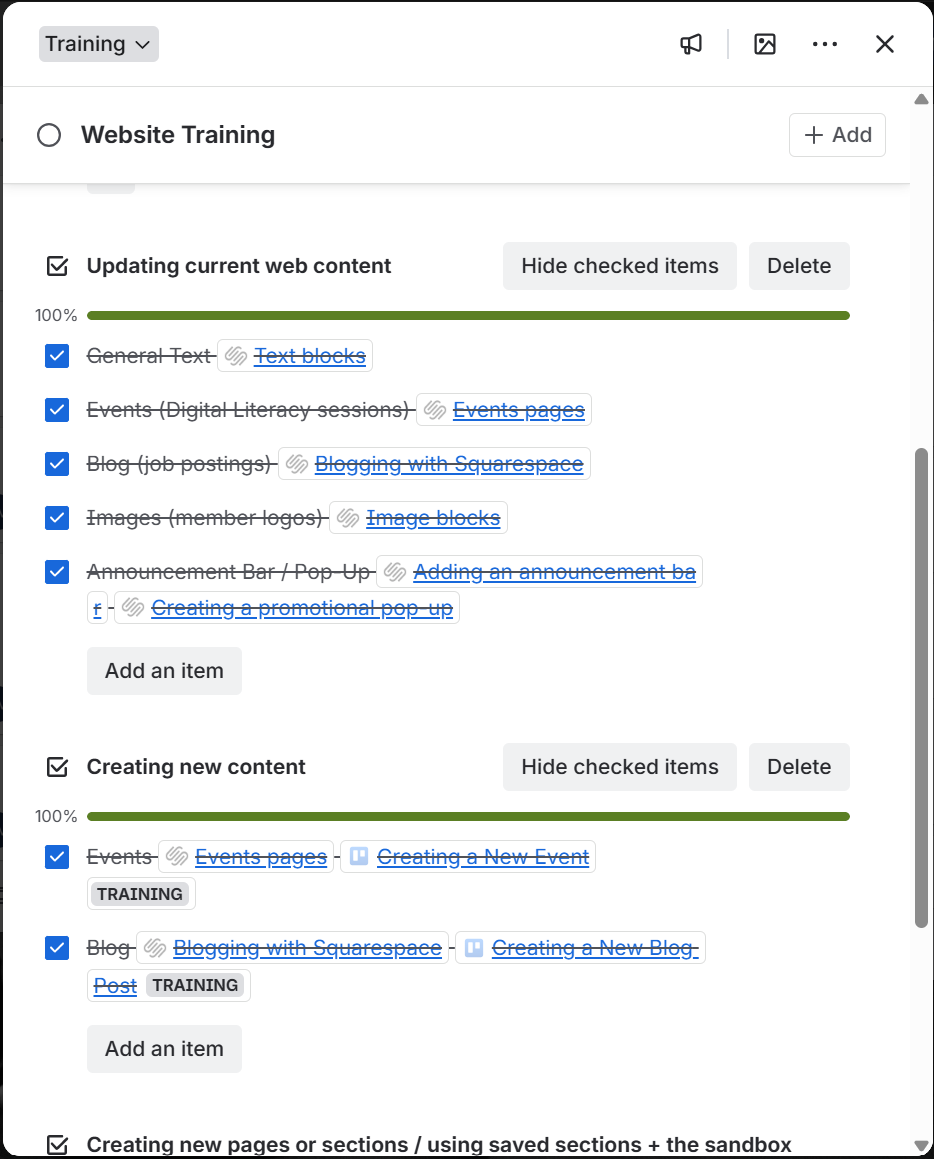
Training was embedded into real work. Weekly check-ins, collaborative planning, and shared tools allowed internal staff to build confidence while maintaining continuity across programs.
The pace of transition was shaped by program needs, not arbitrary timelines.
What This Looked Like in Practice
Internal ownership grew through collaboration.
causeFX supported:
Co-led planning and execution across active initiatives
Hands-on training embedded within weekly workflows
Clear documentation and shared tools to support continuity
Gradual shifts in responsibility aligned with staff readiness
Support remained available throughout the transition, ensuring stability while ownership increased.
Outcome
scaleLIT strengthened its internal capacity to manage communications over time.
The organization was able to:
Maintain clarity and consistency during periods of transition
Build confidence across staff responsible for communications
Sustain systems and workflows introduced through the partnership
Adapt communications as programs evolved without external dependence
Communications became a durable internal capability rather than a fragile function.
Why This Matters
Many partnerships struggle at the point of transition. By embedding capacity building into real work and aligning the pace of change with program realities, this partnership avoided disruption while strengthening long-term sustainability.
For scaleLIT, this meant communications could continue to support services with confidence and continuity.